TL;DR: Today I went looking for missing website files and accidentally uncovered more than twenty years of web history, created five playbooks, and built the first version of a custom WordPress theme.
Full Disclosure
Today I finally let the abomination that was my website define my goals for the day.
It started because I have three different GoDaddy hosting plans. They can accommodate all of my websites under one plan, but I have never taken the time to untangle what lives where, what is still active, what should be archived, and what deserves to become part of a portfolio.
So I opened ChatGPT and started making an inventory.
That sounds simple. It was not simple.
First: inventory the Connex
My hosting accounts look a little like someone threw twenty-five years of websites, sandboxes, family photos, writing projects, ranch experiments, half-finished rebrands, and client work into a shipping container and shut the door.
The first job was not to migrate anything. It was to label the boxes.
We created a basic classification system:
- Live — still serving a purpose
- Redirect — a domain that should point somewhere else
- Archive — worth preserving, but not keeping alive as WordPress
- Portfolio — work I want to show
- Delete after backup — the digital equivalent of finally taking something to the dump
From there, the cleanup became a set of playbooks instead of one giant impossible task:
- Clean up
chellisage.com, because that hosting plan is the final landing spot. - Migrate Desert Sage Ranch and retire its separate hosting plan.
- Untangle the Sage Family Tree hosting plan and move or archive what matters.
- Recover missing history through the Wayback Machine.
- Eventually turn the theme we are building into something reusable and marketable.
Then the Wayback Machine opened the toy box
While trying to figure out where some of my old content had gone, I looked up earlier versions of chellisage.com.
That was the end of staying on task.
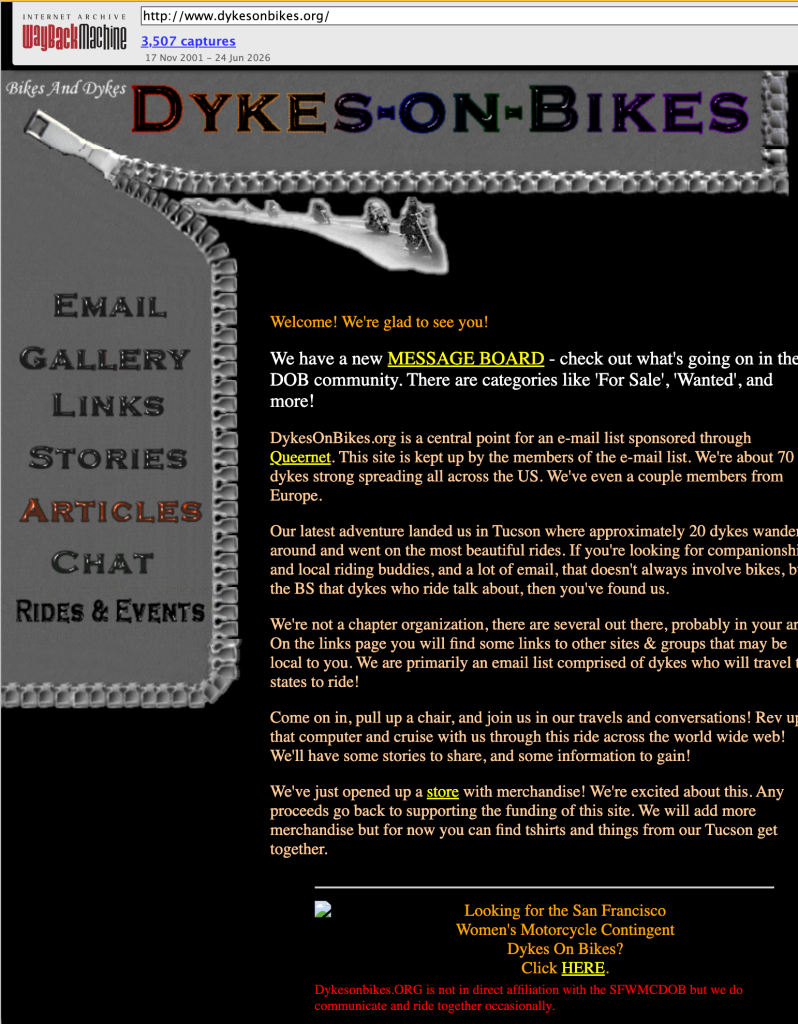
I found the 2004 site for the Queernet dykesonbikes listserv community. It was gloriously early web: custom graphics, chain borders, embossed navigation, black backgrounds, bright text, and a message board announcement. The Wayback Machine shows thousands of captures.
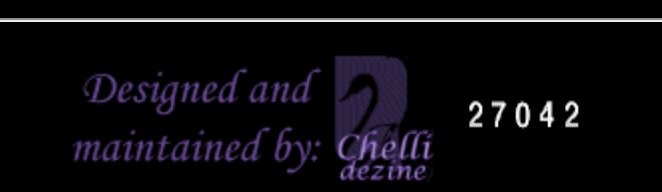
I also found proof that, before SageDezine, I called my web work Chelli Dezine. The footer included a visitor counter showing 27,042 visits, which was a fun reminder that I was not just making pages and abandoning them in a corner of the internet.
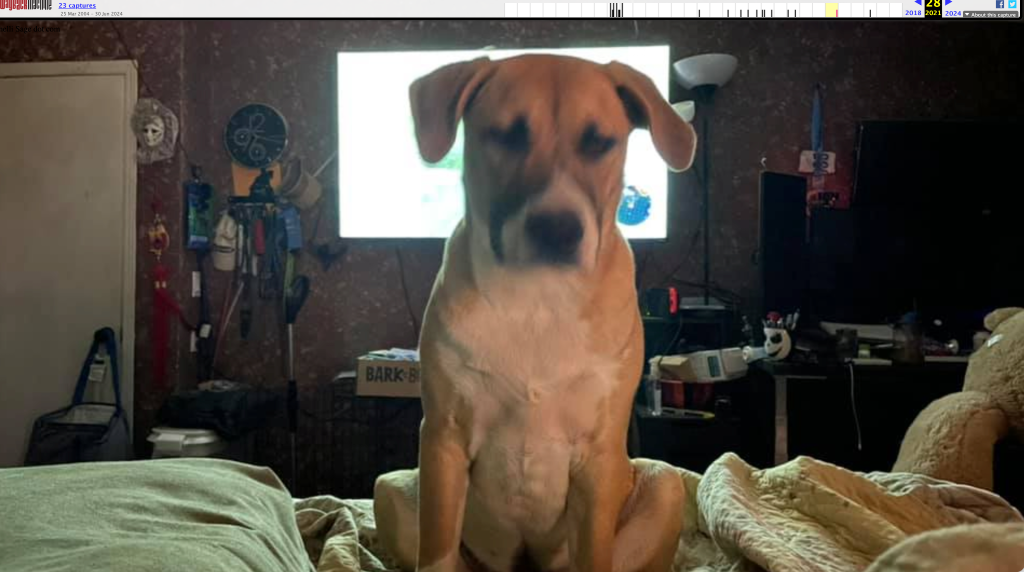
There were writing projects, old résumés, and several very different lives of the same domain. By 2021, the entire site had become one photograph of Apollo sitting directly in front of me and blocking my attempt to play Breath of the Wild. He was a newly rescued 110-pound pain in my ass, and apparently that was the complete brand strategy.
The historical review is now documented. The actual scraping and portfolio recovery will happen later.
Curb appeal before moving day
The important decision was to clean up chellisage.com before migrating more sites into it.
There was no point moving organized boxes into another chaotic shipping container. The destination needed at least a fresh coat of paint and a place to put things.
The first design attempt was polished, warm, and completely forgettable. It looked like a nice premium WordPress theme—which was exactly the problem.
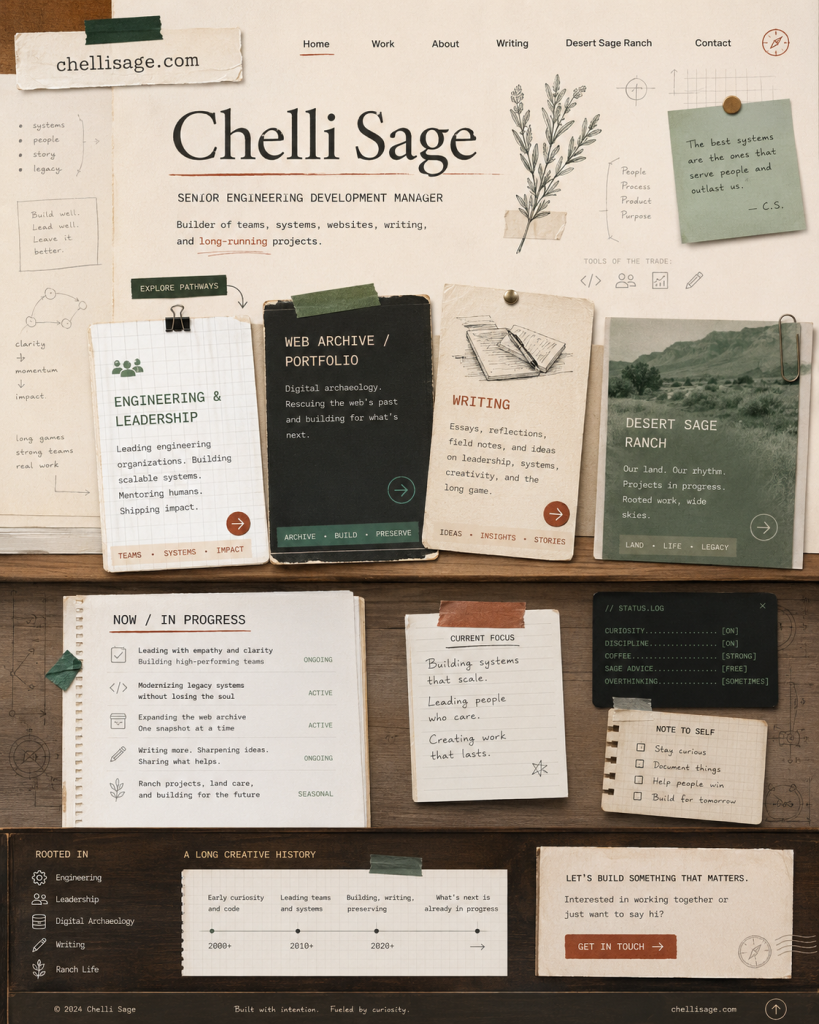
The next direction came from my actual workspace: a whiteboard, shelves, post-its, random awards, trinkets, cables, notes, and several different kinds of work happening at once. We translated that into an organized creative workspace design:
- taped and pinned cards instead of sterile corporate boxes
- graph paper, notebooks, dark archive cards, sketches, and wood surfaces
- engineering notes mixed with writing, ranch life, old web artifacts, and digital art
- modular visual treatments that can eventually rotate independently from the content
The design is intentionally a little messy, but not careless. It should feel like a workbench where everything has a story.
What we built today
In roughly six hours, we went from the untouched WordPress “Hello world” screen to a functioning custom foundation.
We created:
- a generic parent block theme, currently using the development name Artifact Workbench
- a
ChelliSagechild theme for my site-specific branding and overrides - a companion plugin for portable portfolio-project content and structured metadata
- desktop, tablet, and mobile homepage concepts
- an interior page layout
- an individual blog-post layout
- modular homepage sections for work, archives, writing, ranch life, current projects, history, and contact information
- a working project journal so the decisions and code do not disappear into a chat transcript
The first live theme render is not the finished design. It is too orderly, too flat, and some of the content is confidently untrue. But the structure works, the site no longer looks abandoned, and we now have something safe to iterate on.
Current status:
Presentable. Functional. Mildly inaccurate. A little broken. Better than stupid.
What comes next
The next chapter is making the homepage editable through the normal WordPress page editor and replacing the placeholder copy with content that is actually true.
After that, we can add the personality layer: configurable backgrounds, transformations, overlapping artifacts, sidebars, real creative work, old-site fragments, DSR branding, cosmic artwork, coloring-book line art, and more of the cool things that actually happen in that messy office.
Eventually, the other sites will move into the cleaned hosting plan. Some will remain live. Some will become static archives. Some will become portfolio projects. Some will finally be allowed to die after a proper backup.
For now, this is a good start.
The website is no longer stupid. It is merely ineffective in several interesting and fixable ways.
Pictures of the iterations today.
Starting:
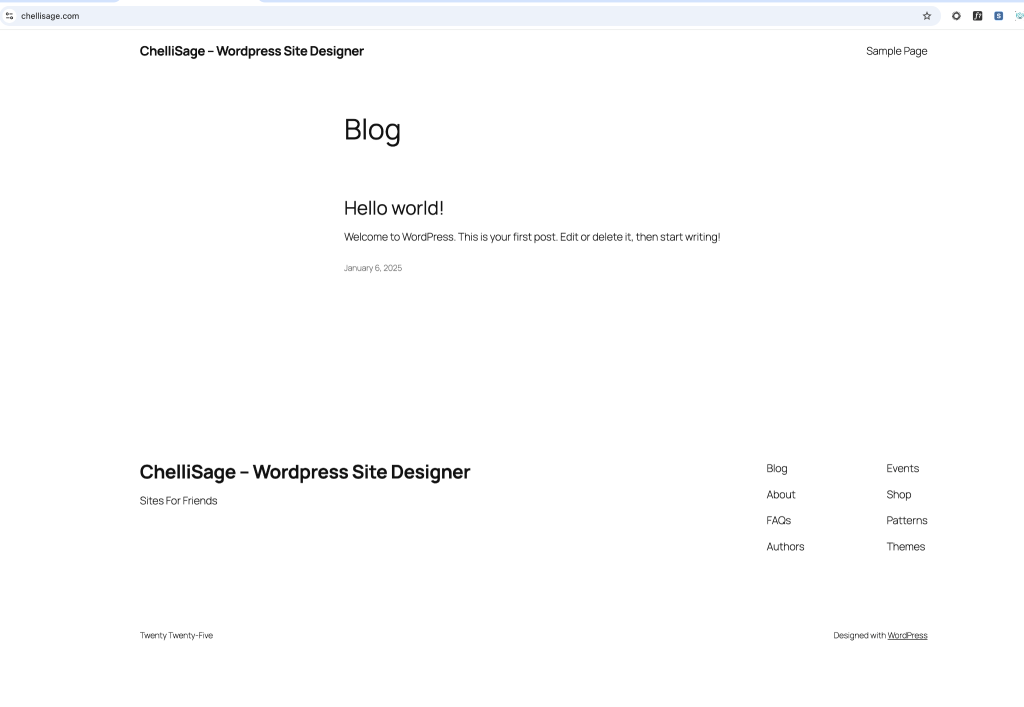
The first design iteration was way to corporate and blocky wordpressy mess
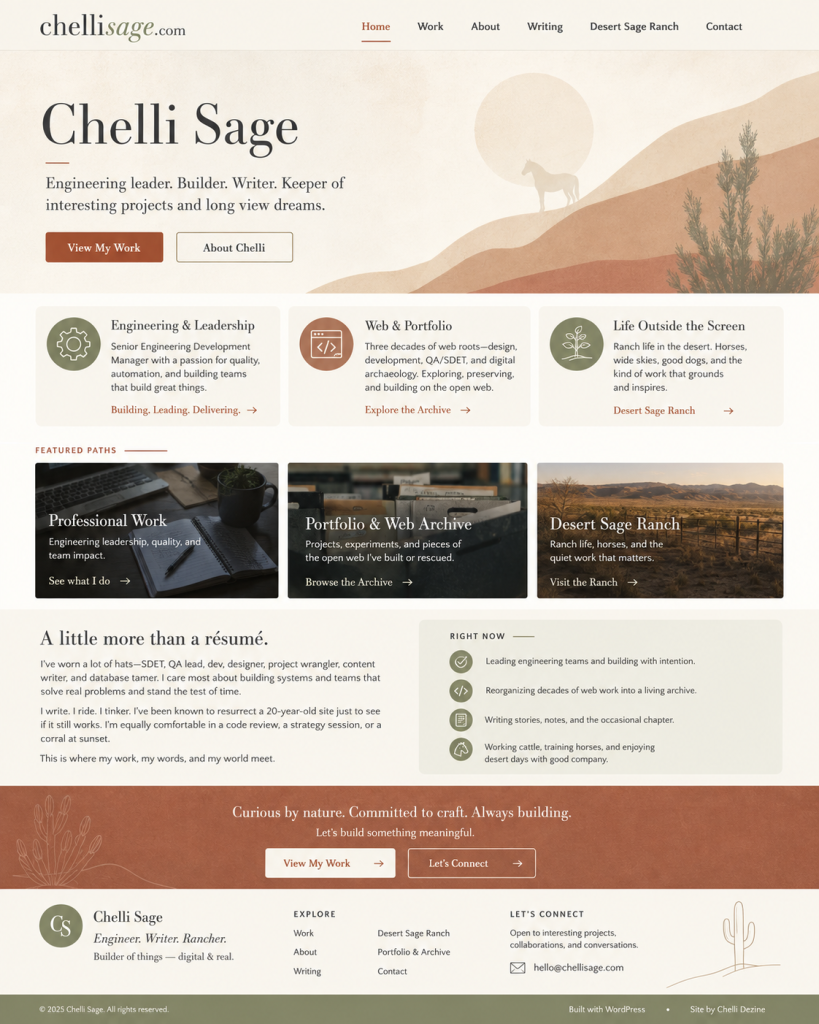
And then finally we hit it – the design goal